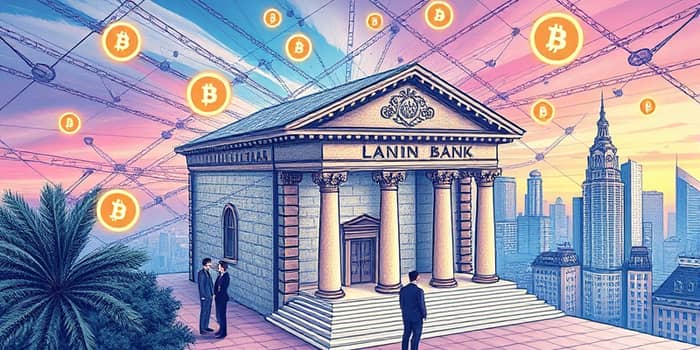
The year 2026 marks a pivotal moment where the worlds of traditional finance and crypto assets begin to converge at scale, creating new pathways for innovation, inclusion, and growth.
After years of skepticism, regulators have shifted gears from enforcement-heavy approaches toward pro-innovation frameworks for digital assets. This change offers financial institutions unprecedented clarity to participate in tokenized markets.
In the United States, landmark legislation and executive orders passed in 2025 have defined tokenized securities, stablecoins, and digital derivatives under harmonized frameworks. The SEC and CFTC now collaborate on taxonomy and trading rules, enabling 24/7 markets for spot and derivatives without ambiguity.
Globally, public-private working groups focus on interoperable cross-border standards. By establishing common rules for digital asset custody and licensing, they reduce friction and build trust in multi-jurisdictional trades.
Tokenization of real-world assets (RWAs) transforms ownership models, unlocking liquidity and fractional participation in previously illiquid markets. From real estate to fine art, tokenized shares now trade on-chain.
Institutional players led by major asset managers are deploying tokenized funds that allow investors to buy slices of private credit pools or private equity portfolios. The result is greater access to high-yield strategies for a broader audience.
A simple table highlights key 2026 trends in tokenization:
Major banks and fintech firms now operate hybrid platforms that combine traditional custody with decentralized protocols. Projects like JPM Coin on public chains and Citi Token Services illustrate a shift toward integrated payment and custody solutions.
Multi-chain interoperability platforms facilitate cross-border payments and collateral mobility. Institutions deploy enterprise-grade blockchains for syndicated loans and repo markets, achieving both scale and regulatory compliance.
Non-custodial wallets have matured to offer insurance-backed storage, enabling retail and institutional participants to hold tokenized assets securely. This evolution answers longstanding concerns about safe on-chain asset management.
Artificial intelligence now operates as an intelligence layer on top of blockchain’s trust layer, automating tasks from risk management to portfolio rebalancing. Smart contracts interact with AI agents that analyze market data in real time.
Enterprises leverage machine learning to predict collateral demands, optimize liquidity, and adjust on-chain margin parameters. The result is a self-regulating financial ecosystem where bots execute trades under predefined guardrails.
As edge computing and IoT devices proliferate, tokenized micro-assets—such as carbon credits or digital twins of physical goods—are tracked with sensor data secured on-chain, blending the digital and physical worlds.
Despite progress, barriers remain. Traditional custodians grapple with insurance requirements for on-chain assets, while accredited investor rules limit retail participation in high-yield tokenized products.
Policy debates continue around competition law and the role of central banks in issuing digital currencies. Converting cash to digital deposit tokens requires robust anti-money laundering and know-your-customer frameworks.
Standards for privacy-preserving interoperability and resilience against cyber threats are emerging areas of focus. Stakeholders must collaborate to build secure, scalable infrastructure that balances openness with regulatory oversight.
To harness the momentum of 2026, each group has a role to play:
As TradFi and crypto assets converge, 2026 stands as the foundational year for on-chain finance at global scale. The fusion of regulatory clarity, asset tokenization, interoperability, and AI-driven intelligence promises more inclusive and efficient markets.
By embracing these changes responsibly, stakeholders can unlock unprecedented value, transforming how we invest, trade, and interact with financial systems. The journey has just begun—and the path forward is rich with opportunity.
References