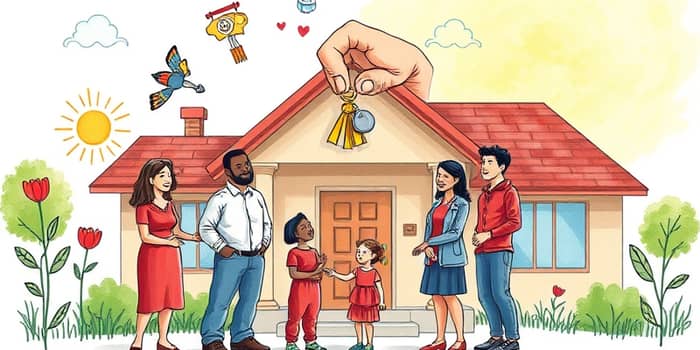
Owning a home is more than an investment—it’s the foundation of lifelong memories and financial security. Yet, many aspiring homeowners feel blocked by credit scores, down payments, and stiff lending criteria. Government-backed loans exist to tear down those barriers and offer a bridge toward your dream home.
A government-backed loan is a mortgage guaranteed by a government agency. If a borrower defaults, the agency reimburses the lender, reducing the lender’s risk. This structure makes homeownership more accessible by allowing more lenient approval standards.
Born from the aftermath of the Great Depression, these programs have evolved to support first-time buyers, veterans, rural families, and individuals rebuilding credit. With the federal government backing the loan, lenders can offer competitive rates and lower down payments, while borrowers gain access to financing they might otherwise lose out on.
There are three primary federally insured mortgage programs:
FHA loans open doors for those who struggle to meet conventional underwriting guidelines. By insuring the loan, the Federal Housing Administration allows lenders to approve borrowers with more lenient qualification criteria.
Key features of FHA loans include:
To qualify, borrowers must complete a homebuyer education course and occupy the property as their primary residence. Eligible properties range from single-family homes to manufactured homes and condominiums. FHA loans also offer loss mitigation options, helping homeowners avoid foreclosure when financial challenges arise.
Imagine a young couple with some past credit hiccups and limited savings. An FHA loan with its low down payment options and responsive support gives them a clear path to homeownership, turning hope into reality.
VA loans stand among the most generous mortgage programs in America. Backed by the Department of Veterans Affairs, they offer features that conventional loans cannot match.
Major benefits include:
These loans can be used for purchases, refinances, and even assumptions, where a qualified buyer takes over an existing VA loan. In 2026, VA loan guarantees cover up to 25% of amounts up to $806,500, with flexible funding fee structures to preserve taxpayer funds while keeping borrower costs manageable.
Consider a veteran returning to civilian life, juggling family needs and career shifts. A VA loan provides unmatched benefits for eligible borrowers, reducing financial strain and rewarding their service with a stable home of their own.
For families dreaming of wide-open spaces and small-town charm, the USDA loan offers a true zero-down financing option. Designed to uplift low- and moderate-income households in designated rural and suburban areas, these loans carry competitively low interest rates.
Borrowers typically need a credit score of at least 640, and household income must fall within program limits. Outside major urban centers, homeowners can claim tax deductions and access affordable mortgage insurance, making rural living more attainable than ever.
By directing resources toward underserved communities, the USDA program fosters local development and promotes economic stability. It’s a powerful tool for turning farmland vistas into family neighborhoods.
As mortgage originations are forecast to rise—purchase loans up 7.7% to $1.46 trillion and refinances up 9.2% to $737 billion—government-backed loans will play a pivotal role. With mortgage rates projected between 6% and 6.5% and conforming loan limits increasing by 3.26%, savvy borrowers will explore FHA, VA, and USDA options to manage costs.
Housing affordability remains strained by rising home prices, taxes, and insurance costs. Adjustable-rate mortgages and specialty government programs are helping families cope, while lenders innovate to reach self-employed entrepreneurs, real estate investors, and homeowners seeking to unlock equity.
Conventional loans reward borrowers with strong credit and sizable down payments by offering the lowest long-term costs. In contrast, government-backed loans compensate those lacking traditional qualifications with down payment assistance and more forgiving credit standards.
Choosing the right program depends on your profile:
• First-time buyers with limited savings may lean toward FHA. • Military families gain unmatched perks via VA. • Rural aspirants thrive with USDA’s zero-down model.
Applying for a government-backed mortgage involves:
1. Gathering your financial documents (income proof, tax returns, credit report). 2. Obtaining a Certificate of Eligibility if pursuing a VA loan. 3. Shopping lenders who specialize in these programs to compare rates and fees. 4. Completing required education courses for FHA loans and USDA certifications.
By working closely with experienced loan officers, you can navigate guidelines, negotiate closing costs, and lock in the most favorable terms. Armed with knowledge and preparation, your homeownership journey becomes a source of confidence rather than anxiety.
Government-backed loans represent more than financial products—they symbolize opportunity. They say to borrowers, “We believe in your dream, and we’ll stand behind you.” Whether you’re stepping onto the property ladder for the first time, returning veteran seeking stability, or a family eager for rural tranquility, these programs empower you to write the next chapter of your life.
Start by assessing your credit, exploring program requirements, and reaching out to lenders who understand government-backed lending. With the right strategy and support, you can transform the idea of home into a place where your future takes root and flourishes.
Embrace the possibilities. Your home awaits.
References