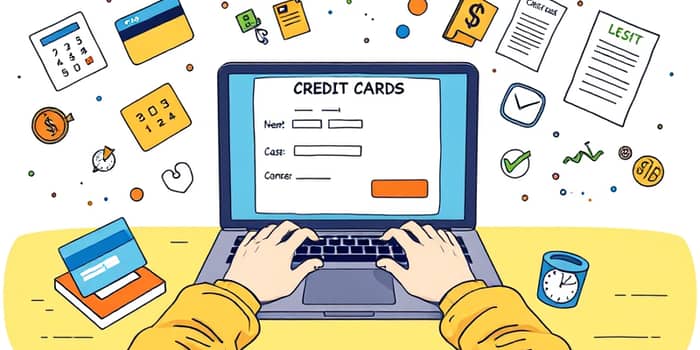
Applying for a credit card can feel daunting, but understanding each step can transform the experience into a smooth journey. From eligibility checks to approval timelines, this guide unlocks the process.
Credit card applications may seem routine, yet they involve several critical components. Lenders perform eligibility reviews, assess personal and financial data, and evaluate credit history to determine your repayment ability and risk. Most applications can be started online, by phone, or in-person at a branch, but online is often the fastest path to approval.
First-time applicants benefit from applying directly through issuer websites. With preparation, the submission takes under 10 minutes, and responses can arrive instantly or within a day or two, depending on the issuer.
Before you begin, ensure you meet these fundamental criteria. Missing one can delay or derail your application.
Applicants must be of majority age, possess a Canadian credit history, and demonstrate sufficient income. For newcomers or those rebuilding credit, secured or student cards offer a pathway to build good and stable credit history.
The online flow below applies broadly; phone or in-branch methods follow similar stages.
Phone applicants typically dial the issuer’s service number, while branch visitors supply the same information in person. Preparation speeds every route.
Gather these details in advance to prevent delays:
Accurate and complete answers ensure the issuer can swiftly verify your profile and reduce the chance of a rejection.
Once submitted, the issuer pulls your credit report from Equifax or TransUnion. A hard inquiry reveals payment history, utilization, recent inquiries, and public records.
Key factors include on-time payments, debt-to-limit ratios, and overall credit age. Issuers look for consistent on-time payment history and assess potential default risk.
Possible outcomes include approval with a set limit, a decline, or a pending status requiring extra documentation.
If approved, activate the card upon arrival and begin using it. Some cards enable instant use of your new account for online purchases.
Declined or pending applications are followed by an email or phone call providing reasons. Review your credit report, correct any errors, and consider prequalification next time.
Avoid these mistakes to increase your approval odds:
Expert advice: check your credit score before applying, prequalify when possible, and match your profile to the card that best aligns with your financial situation.
By understanding each facet—from prerequisites through behind-the-scenes credit evaluation—you can approach your next credit card application with confidence, equipped with the knowledge to navigate each step successfully.
References