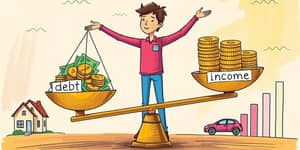
Embarking on a debt repayment journey can feel daunting, but with the right strategy, you can regain financial control and build momentum toward freedom.
Two popular repayment strategies—the Debt Snowball Method and the Debt Avalanche Method—offer different paths to becoming debt-free. While one focuses on psychological motivation through quick wins, the other aims for maximum interest savings over time. Understanding how each approach works empowers you to choose the path that aligns with your mindset and goals.
Both strategies rely on the core principle of making minimum payments on every debt to maintain good standing. The difference lies in where you apply additional funds. While the avalanche fights the war on interest, the snowball fights the war on motivation. Recognizing which battle you struggle with helps you select the best weapon for victory.
The choice between these strategies often mirrors your emotional relationship with money. Research in behavioral economics shows that instant gratification activates reward centers, making small wins more impactful than distant gains. If you need that dopamine boost to stay engaged, the snowball might align better with how your brain thrives on quick feedback. Conversely, if you find satisfaction in long-range planning and optimization, the avalanche method may resonate with your preference for strategic long-term victories.
The beauty of the snowball approach is its simplicity. By prioritize debts by balance size, you experience early victories that can fuel your motivation. Each time you eliminate a balance, the payment you used on that debt becomes available for the next target, creating a growing “snowball” of payments.
For instance, imagine you have a $500 medical bill, a $1,200 credit card, and a $3,000 car loan. You might apply an extra $300 each month to the $500 balance until it disappears. That sense of achievement motivates you to continue, rather than feeling overwhelmed by large balances that take years to shrink.
This method is especially effective if you find yourself easily discouraged by slow progress. When you see debts vanish rapidly, your confidence grows and you stay committed to your plan. Many individuals report that small successes fuel lasting motivation and prevent them from returning to old spending habits.
Take the example of Maria, who carried two small credit card balances and a larger auto loan. She allocated an extra $200 each month to her smallest $300 balance and paid it off in just two months. Buoyed by that success, she redirected $250 toward her next debt, cutting years off her loan term and freeing up mental energy to focus on her career and personal goals.
The avalanche method is built on a simple mathematical truth: you save more by targeting highest interest rates first. Over time, the interest you avoid paying can translate into thousands of dollars saved, especially on high-rate credit cards or personal loans.
Consider three $1,000 debts at 8%, 6%, and 4%. By directing all extra payments to the 8% balance, you minimize the compound interest that accrues every month. As that high-rate debt is paid off, the freed-up cash flow attacks the 6% balance more aggressively, and so forth.
This approach requires patience, because if your highest-rate balance is also your largest, it might take months before you see a zero balance. However, if you’re committed to long-term savings and efficiency, the avalanche can shorten your overall payoff timeline and reduce the amount you pay in interest.
Similarly, Jason and Leah tackled over $15,000 in combined student and credit card debt by focusing on their highest-rate cards first. They built a simple spreadsheet that projected interest saved month by month and found that the avalanche approach saved them nearly $2,000 in interest over three years. Their disciplined approach, including biweekly payments and occasional extra gifts of bonus checks, kept them on schedule and underscored the power of data-driven financial decisions with precision.
Choosing between these two strategies depends on whether you value momentum or efficiency. Below is a compact comparison:
While the avalanche method wins mathematically, the snowball can be more motivating for consistent action. Understanding these trade-offs helps you build a plan that fits your personality and financial situation.
Your personal financial habits, emotional drivers, and long-term goals will guide your choice. Ask yourself:
Many people start with the snowball for early momentum and then switch to the avalanche to optimize savings. This hybrid approach leverages the strengths of both methods and can adapt as your mindset evolves.
Beyond personal preference, your income stability and cash flow patterns can influence the ideal strategy. If your earnings vary, for instance due to freelancing or commission-based work, you may prefer the predictability of the snowball approach, which tends to be less intimidating. Alternatively, if you earn a steady salary with room to adjust contributions, the avalanche can be customized to maximize savings. The key is to create a plan you can sustain for the long haul.
Even the most well-crafted plan can falter if you encounter unexpected challenges. Maintaining momentum requires vigilance and adaptability. Here are some strategies to keep you focused:
First, build an emergency cushion. Having a small fund to cover unplanned expenses prevents you from derailing your debt plan when life throws a curveball. Second, enlist an accountability partner—a friend or family member who checks in on your progress and celebrates milestones with you.
A common pitfall is sliding back into old spending habits once one debt is paid off. To avoid this, redirect the cash flow you’ve freed up toward your next target immediately. Keep that positive financial habit loop alive by setting new small goals and rewarding yourself in non-financial ways, such as enjoying a free home movie night or a nature walk.
Regardless of which method you choose, follow these guidelines to maintain steady progress:
Set a realistic budget that allocates consistent extra contributions each month. Automate your payments to avoid missed deadlines. Use visual trackers—like a chart on your wall or a simple spreadsheet—to see your debts shrink over time. Reviewing your plan regularly helps you adjust for income changes or unexpected expenses.
Celebrate every milestone, no matter how small. Whether it’s paying off your first $100 balance or closing out a long-standing loan, recognizing your achievements keeps motivation high. Share your successes with a supportive community, online or offline, to reinforce positive behavior.
If you face variable-rate debt or have access to consolidation options such as personal loans or balance-transfer cards, consider integrating these tools into your strategy. Always compare the total cost of consolidation versus the benefits of simpler repayment tracking.
Don’t overlook the power of negotiation. Calling lenders to request lower interest rates or asking for fee waivers can transform high-rate debts into more manageable obligations. Employer benefit programs, credit union memberships, or nonprofit credit counseling services can also provide avenues to reduce your costs. Proactive communication with creditors often unlocks opportunities that go beyond standard repayment plans.
Your path to true financial freedom and peace of mind begins with a clear plan and the commitment to see it through. Whether you choose the psychological lift of the snowball or the mathematical efficiency of the avalanche, each payment brings you a step closer to being debt-free. Embrace the process, stay disciplined, and watch your efforts snowball into lasting results.
References