Exchange-traded funds (ETFs) have transformed the financial landscape since their debut in 1993. Investors of all levels now harness these versatile vehicles to build resilient portfolios, capture growth opportunities, and manage risk.
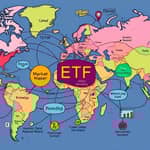
With global ETF assets under management surpassing $13.7 trillion as of mid-2025 and projections to double by 2030, the momentum behind ETFs is unstoppable. This article explores how you can leverage the instant access to global markets and diversify without holding individual securities to align with your financial goals.
Since 1993, ETFs have experienced exponential growth. Early adopters appreciated the blend of mutual fund diversification with stock-like trading. By June 2025, global ETF AUM reached $13.74 trillion, marking a revolution in investment accessibility.
Active management has also surged. In 2023, 76% of U.S.-listed ETF launches were active, and global active ETF AUM of $900 billion is expected to climb to $4 trillion by 2030. Investors now find dynamic strategies within the ETF wrapper, broadening the spectrum of opportunities.
One of the defining features of ETFs is their trading flexibility. Unlike mutual funds, which price once at the end of the day, ETFs trade throughout the trading day at live market prices. This capability empowers you to respond instantly to market events and volatility.
Commission-free ETF offerings on many brokerage platforms further reduce costs, making active rebalancing and tactical shifts more practical than ever.
ETFs inherently hold baskets of assets—stocks, bonds, commodities, currencies, or futures—allowing you to spread risk across multiple securities with a single trade. This approach helps shield your portfolio from sharp drops in any individual holding or sector.
Active and semi-transparent ETFs further enhance diversification by allowing managers to shift exposures in real time, capitalizing on market inefficiencies.
Cost savings and tax management are hallmarks of ETFs. Most passive ETFs boast low expense ratios of passive ETFs that undercut comparable mutual funds. Additionally, in-kind creation and redemption mechanisms minimize capital gains distributions, making ETFs optimize tax outcomes with in-kind creation/redemption.
This structure is especially beneficial in taxable accounts, where investors can harvest losses without triggering wash-sale restrictions. The transparency of daily holdings further aids in anticipating taxable events.
ETFs fit seamlessly into a core-satellite portfolio design, offering a broad market foundation with targeted tilts for alpha. Retail and institutional investors alike harness ETFs for:
Moreover, tactical investors use ETFs for rapid sector rotation, volatility hedging, and capitalizing on emerging-market dislocations.
In uncertain markets, ETFs offer tools to manage drawdowns and seize opportunities. By distributing holdings across multiple securities, you can diversify without holding individual securities and maintain discipline through systematic rebalancing.
Automated strategies leveraging ETFs—such as recurring investments via DRIPs or model portfolios—can further smooth volatility and reinforce long-term objectives.
ETFs represent a paradigm shift in how investors access markets, blending the best traits of mutual funds with the agility of stock trading. From diversified global market exposure in a single trade to advanced order types and tax efficiency, ETFs empower you to craft portfolios that reflect your risk tolerance, time horizon, and investment aspirations.
As the ETF landscape continues to innovate, with new active strategies and thematic approaches emerging, now is the time to deepen your understanding and put these versatile instruments to work. Embrace the flexibility. Embrace the diversification. Let ETFs guide you toward a more resilient, growth-oriented financial future.
References