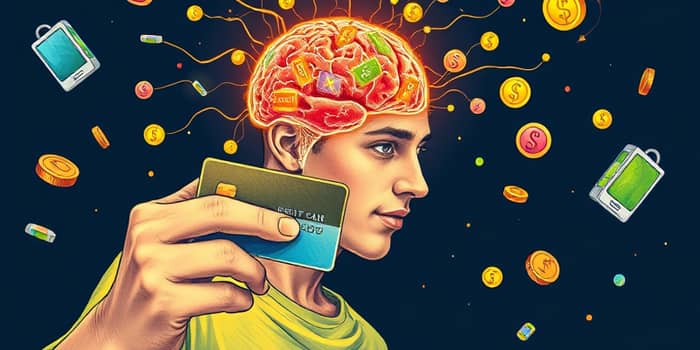
Credit cards have revolutionized how we spend, offering convenience at our fingertips. Yet beneath the surface, a subtle transformation occurs in our minds whenever we swipe, tap, or click. These invisible forces influence our behavior, often pushing us toward unplanned purchases and higher-than-intended spending.
In this exploration, we unveil the core mechanisms driving impulse credit card buys, examine the triggers that set them off, highlight individual vulnerabilities, and propose practical strategies to reclaim control over our finances.
At the heart of impulsive spending lies separating pleasure of purchase from pain. Unlike handing over cash, using a credit card obscures the immediate loss, making each transaction feel consequence-free and effortless.
This phenomenon—known as payment decoupling—reduces the psychological barrier to parting with money. When payment feels abstract, our natural caution fades, and we are more likely to add items to our cart without pausing to consider affordability or necessity.
Neuroscientific research reveals that credit card transactions activate the brain’s dopamine reward center activation. fMRI studies show heightened striatum activity at the moment of purchase, mirroring the responses seen with addictive substances or casino cues.
As we anticipate the pleasure of acquiring a new item, dopamine surges, reinforcing a loop: see item → purchase → pleasure → repeat. Over time, this loop conditions us to chase that fleeting high, making impulse buys feel almost irresistible.
Multiple forces—both external and internal—can tip us into spontaneous spending. Recognizing these triggers is the first step toward mindful control.
Not everyone is equally affected by these psychological drivers. Some of us feel the sting of parting with cash more acutely, while others breeze through transactions with little guilt.
The shift toward a cashless society offers unparalleled convenience but also amplifies hidden psychological forces. Different payment methods can influence spending in varied contexts, from dining out to online shopping.
Contactless and phone payments further dilute payment pain by removing even the brief hesitation of swiping a card. As these methods proliferate, awareness of the underlying drivers becomes crucial for financial well-being.
Understanding these psychological forces empowers us to take concrete steps toward mindful spending. Implementing structured habits can interrupt the reward cycle and restore balance.
By decoding the hidden mechanisms behind impulse credit card buys—payment decoupling psychological effect—we reclaim agency over our choices. Armed with awareness and practical tactics, we can enjoy the convenience of modern payment methods without sacrificing financial health.
References